

Seventy-two-year-old Lakshmi couldn't walk to the corner store without her back screaming in protest—until she discovered something most people overlook: poor posture was stealing her independence, not just her age.
The Hidden Thief Nobody Talks About
Here's what your doctor might not tell you: the stooped shoulders and forward head position you've developed over decades aren't just cosmetic problems. They're systematically dismantling your ability to move freely, climb stairs, and live without constant pain. While everyone obsesses over heart health and diabetes (and they matter), the collapsing architecture of your spine determines whether you'll walk unassisted at 75 or need a walker at 65.
HSR Layout's older residents are waking up to this reality faster than most neighborhoods in Bengaluru. The area's concentration of educated retirees means information spreads quickly—and right now, the conversation centers on geriatric posture physiotherapy in HSR Layout as the difference-maker between dependence and freedom.

Why Your Spine Stopped Cooperating (And What That Really Means)
Your vertebrae don't collapse because they've reached an expiration date. Specific, preventable patterns destroy mobility: muscle imbalances from decades of sitting, weakened core muscles that no longer support your spine, and joints that stiffen from disuse. The kyphosis (hunched upper back) you see in mirrors didn't appear overnight—it crept in while you ignored the early warnings.
The cascade works like this: poor posture places additional stress on your spine, which triggers pain in conditions like arthritis and herniated discs. That pain makes you move less. Less movement creates more stiffness. More stiffness worsens your posture. You're trapped in a cycle that physiotherapy specifically targets and breaks.
Here's the part that changes everything: this isn't permanent. Even long-standing postural problems respond to structured intervention. Adults in their 70s and 80s are regaining spinal alignment, reducing pain, and improving overall mobility through senior posture correction in Bengaluru programs designed for exactly these issues.
The 90-Day Mobility Blueprint
Physiotherapists assess your posture by observing alignment, identifying which muscles have weakened or tightened, and evaluating how freely your spine and joints move. This comprehensive baseline creates your personalized roadmap.
Your treatment combines three evidence-backed approaches:
Manual therapy addresses immediate restrictions—joint mobilization and soft tissue manipulation that release tension you've carried for years. These aren't painful procedures; they're precise techniques that restore range of motion while reducing discomfort.
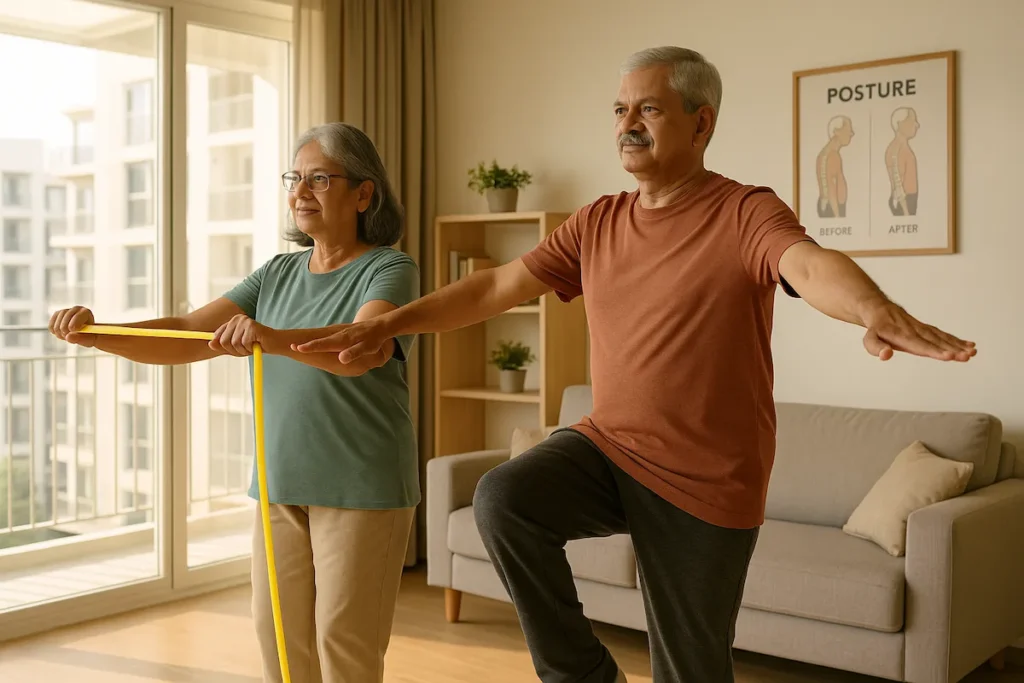
Strengthening exercises rebuild the muscular support your spine desperately needs. Core and back muscle work forms the foundation, supplemented by balance exercises that prevent falls. The progression follows your capacity—you're never pushed beyond safe limits, but you're consistently challenged enough to improve.
Postural re-education teaches your body new patterns. You learn proper body mechanics for daily activities, from sitting at your dining table to lifting grocery bags. This isn't about perfection; it's about reducing the cumulative stress that led to problems in the first place.
The timeline varies, but most people notice meaningful changes within weeks. Some require ongoing therapy for chronic conditions, while others graduate to maintenance exercises they perform independently. Either way, you're moving toward better function, not managing inevitable decline.
What You Gain Beyond Pain Relief
The research on older adults and exercise intervention reveals improvements that extend far beyond a straighter spine. Participants increased gait speed (you walk faster), improved stair-climbing ability (independence in multi-story homes), enhanced grip strength (opening jars, carrying items), and even boosted muscle mass and bone density.
Specific modalities deliver targeted benefits: Tai Chi improves postural control and neuromuscular response, dynamic resistance and functional training increase muscle strength while improving posture, and multi-component programs enhance overall mobility. Your physiotherapist selects techniques based on your specific limitations and goals.
The psychological shifts matter just as much. Staying active and mobile directly supports emotional health. Seniors consistently report feeling more confident and socially involved after physiotherapy. When you can walk to a friend's house or attend a community event without pain, you engage with life differently.
The comprehensive geriatric assessment approach—which includes physiotherapy as a core component—is proven to improve outcomes for older people, particularly those with frailty. This isn't alternative medicine or wishful thinking; it's evidence-based intervention with documented results.
The Home-Based Advantage Nobody Mentions
Not everyone can travel to a clinic three times weekly. Home-based physiotherapy brings the expertise to your living room, where your actual daily challenges occur. Your therapist assesses how your specific environment—the height of your bed, the layout of your bathroom, the furniture you navigate—impacts your mobility and designs interventions accordingly.
This personalized approach addresses real-world function, not generic exercises. You practice transfers using your actual chairs, work on balance in your hallways, and learn modifications for your kitchen tasks. The environment you've shaped over decades becomes part of the solution rather than an obstacle.
Why Waiting Costs You More Than Time
Every month you delay, your body adapts further to dysfunction. Muscles grow weaker, joints stiffen incrementally, and your nervous system reinforces faulty movement patterns. The interventions that could restore 80% of your function today might only recover 60% if you start six months from now.
This isn't scare tactics—it's physiological reality. Your body's systems maintain efficiency when you use them to maximum capacity throughout life. The elderly care principle is clear: disability stems from pathological processes or injury, not inherently from "old age". When you address the actual problem (postural dysfunction, muscle weakness, joint stiffness), you reverse decline that seemed inevitable.
HSR Layout's older residents choosing geriatric posture physiotherapy aren't chasing youth. They're reclaiming the functional independence that determines quality of life in your 70s, 80s, and beyond. They understand something crucial: the difference between thriving and surviving often comes down to whether you can move without pain, maintain balance confidently, and live without constant assistance.

Your Next Step Happens Today
The gap between where you are and where you want to be closes with a single action: assessment. Book a comprehensive posture evaluation at Posture Clinic this week. You'll receive a detailed analysis of your specific postural issues, a clear explanation of how these patterns limit your mobility, and a personalized treatment plan designed for your goals and physical capacity.
No waiting lists. No wondering if therapy might help. Just answers and a path forward.
Don't let another season pass watching others walk confidently while you manage pain. Your spine can support you better—but only if you give it the structured intervention it needs. Call now, or visit our appointments page to schedule your assessment. The mobility you're missing isn't gone; it's waiting on the other side of action you take today.
About This Content: This article references evidence-based practices in geriatric physiotherapy documented in clinical research and professional physiotherapy resources. For detailed technical information, consult sources like Physiotherapy in Geriatric Conditions.