
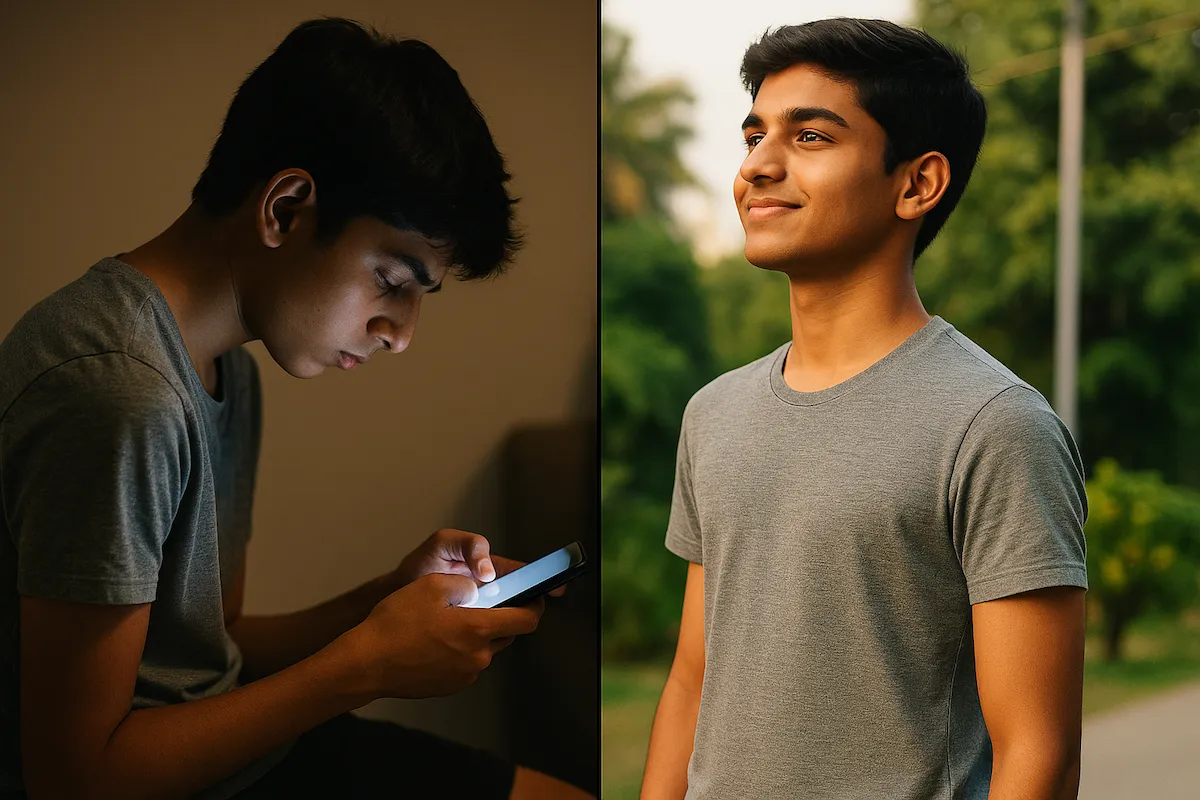
Your 12-year-old just complained about neck pain again. You chalked it up to growing pains. But when you snapped a candid photo yesterday, you noticed something unsettling: their head jutting forward like a turtle peeking out of its shell. Welcome to Koramangala's silent epidemic—and no, it's not another round of viral fever.
The Koramangala Context Nobody's Talking About
Here's what makes our neighborhood uniquely vulnerable: we live in Bangalore's tech hub where work-from-home parents model screen-heavy lifestyles, premium schools assign 5-8 hours of online homework daily, and weekend "downtime" means Netflix marathons, not playground runs. Your child isn't lazy. They're adapting to an environment that practically requires them to hunch.
Recent studies found that children ages 8-12 now average 4-6 hours of daily screen time, while teens hit 9 hours. That's more time staring down at devices than sleeping.
The damage isn't hypothetical anymore. Forward head posture (FHP)—once rare in pediatric cases—now affects 58% of primary school children in recent screenings. And Koramangala kids? They're showing symptoms 2-3 years earlier than previous generations.
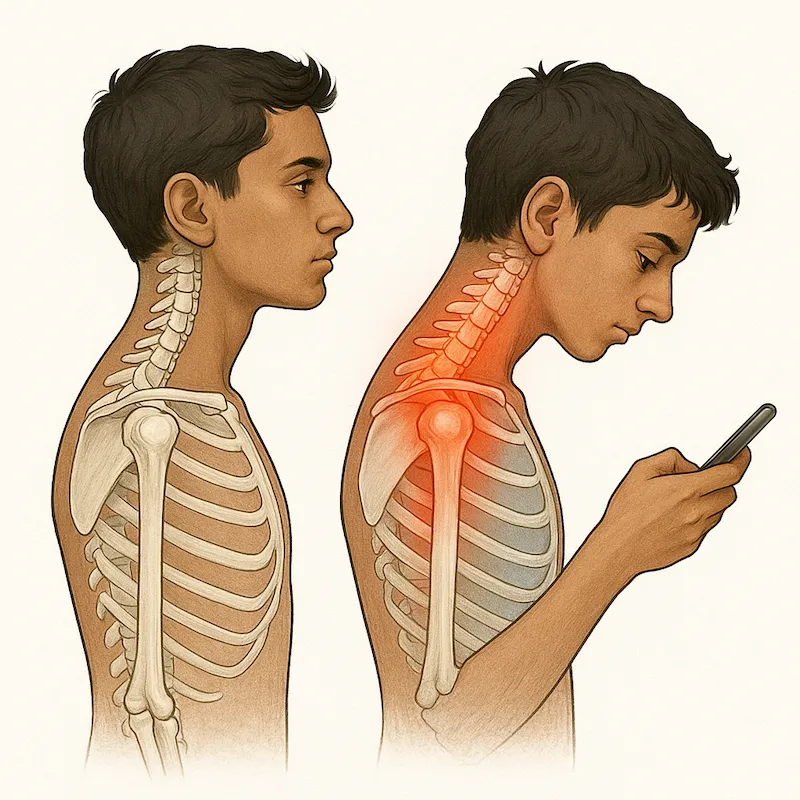
What Forward-Head Posture Actually Does to Your Child's Body
Think of your child's head as a bowling ball (about 10-12 pounds). When positioned correctly, their neck supports it effortlessly. But tilt that head forward just 15 degrees—the angle most kids use while scrolling Instagram or completing homework—and the effective weight on their cervical spine jumps to 27 pounds.
At 60 degrees? That's 60 pounds of pressure crushing down on developing vertebrae.
Here's the cascade effect nobody warns you about:
Immediate symptoms (within 6-12 months): Frequent neck cracking, shoulder humping, complaints of stiffness, difficulty sitting through classes.
Medium-term damage (1-3 years): Chronic pain, flattened neck profile, rounded shoulders, decreased respiratory function, reduced self-esteem.
Long-term consequences: Permanent spinal misalignment, increased injury susceptibility, weakened core muscles, potential neurological complications.
The cruel irony? Kids don't feel pain while they're hunched over their tablets. The discomfort hits hours or days later, making it nearly impossible for them to connect their gaming session to their aching neck.
The Three Hidden Culprits (Hint: It's Not Just Smartphones)
Culprit #1: The "Model Student" Trap
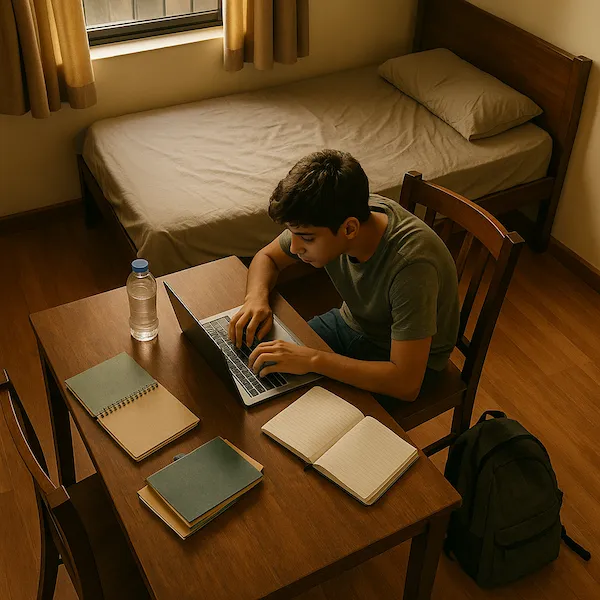
Your child spends 6-7 hours in online classes sitting in dining chairs never designed for prolonged use. Then they tackle 2-3 hours of homework on that same chair. Schools reward completion, not posture. The A+ student is often the one most at risk.
Culprit #2: Post-Pandemic Vitamin D Depletion
During lockdowns, many Koramangala families saw vitamin D levels plummet. Low vitamin D weakens the very muscles that support proper posture. Your child might have the intention to sit straight but lacks the muscular strength to maintain it.
Culprit #3: The Ergonomics Black Hole
Most parents know about limiting screen time. Almost none know their child's monitor should be at eye level, keyboards at elbow height, and feet flat on the floor. This isn't optional information—it's biomechanical necessity.
The 20-20-20-30 Protocol (Your New Family Standard)
Forget vague advice like "sit up straight." Kids need a system so simple they'll actually follow it.
Every 20 minutes of screen time:
- Look at something 20 feet away for 20 seconds (this also prevents eye strain)
- Change sitting position or stand briefly
Every 30 minutes:
Why this works: You're hacking the adaptation cycle. Bodies adopt hunched posture as "normal" after 30-45 minutes of sustained positioning. This protocol interrupts that pattern before it sets in.
Set phone alarms for younger kids. For teens, use apps like Time Timer or the Pomodoro Technique.
The "Chest-Up Contract" (Making It Their Idea)
Here's where reverse psychology comes in. Don't tell your teen to fix their posture. Instead, show them the before/after photos of other teens who corrected FHP. The visible transformation—from hunched to confident—triggers something deeper than parental nagging ever could.
Then propose a 30-day challenge: they track their own posture improvements using weekly selfies. The IKEA effect kicks in—because they're building the solution, they're invested in the outcome.
The contract should include:
- Their chosen screen-break reminder system
- Their ergonomic setup tweaks (let them pick the lumbar cushion color)
- Their physical activity commitment (20 minutes daily minimum)
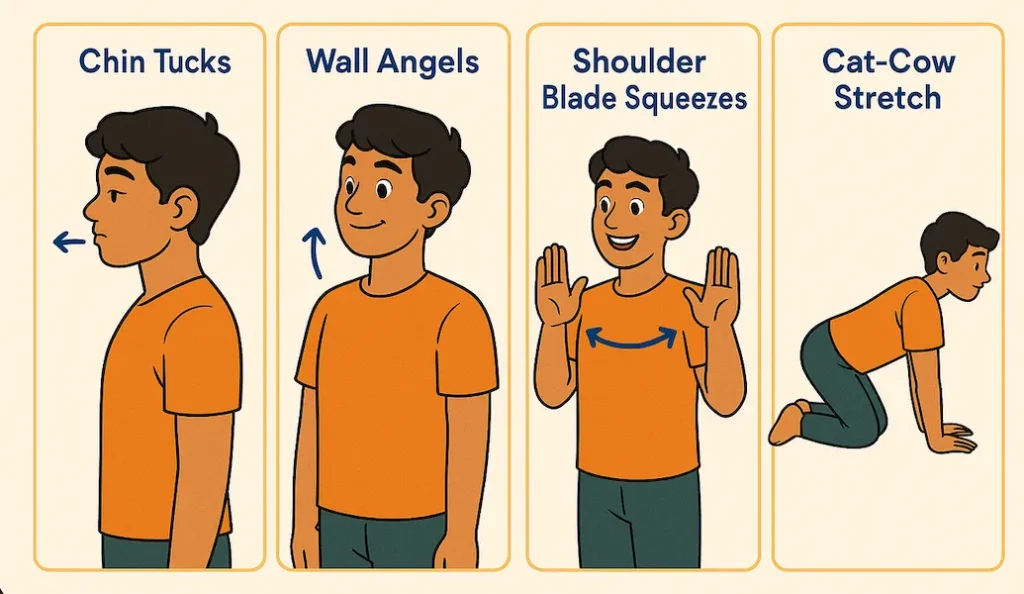
The Exercises That Actually Work (5 Minutes, No Equipment)
These target the exact muscles weakened by forward head posture:
Chin Tucks (30 seconds, 3 sets): Pull chin straight back like making a double chin while keeping eyes forward. Hold 5 seconds, release.
Wall Angels (1 minute): Stand with back against wall, raise arms overhead slowly like making a snow angel. Focus on keeping lower back and shoulders touching the wall.
Shoulder Blade Squeezes (1 minute): Sit upright, squeeze shoulder blades together as if holding a pencil between them. Hold 5 seconds, release.
Cat-Cow Stretches (2 minutes): On hands and knees, alternate between arching back (cow) and rounding spine (cat). Loosens tight neck and spine muscles.
Kids find these boring. Gamify them: 30-day streak earns a reward, missed days reset the counter. Or do them together—your posture probably needs help too.
When Home Fixes Aren't Enough
If your child's posture hasn't improved after 6-8 weeks of consistent home intervention, or if they're experiencing ongoing pain, professional assessment becomes essential.
Posture Clinic in HSR Layout offers child-friendly screenings specifically designed to identify early musculoskeletal imbalances. The earlier professional intervention begins, the faster the correction—children and teens have high neuroplasticity, meaning their bodies respond remarkably well to targeted treatment.
Look for these red flags that signal immediate professional evaluation: constant neck popping or cracking, visible shoulder hump, flat neck profile when viewed from the side, complaints of pain during normal activities, or difficulty maintaining upright posture even briefly.
Your 48-Hour Action Plan
Today (next 2 hours):
- Take side-profile photos of your child sitting naturally with their device
- Check their current workspace ergonomics—measure monitor height, chair support, foot positioning
Tomorrow:
- Implement one ergonomic fix (raised monitor, lumbar cushion, or footrest)
- Set up the 20-20-20-30 reminder system
- Schedule 5-minute exercise session and do it together
This week:
- Propose the 30-day photo-tracking challenge
- Create screen-free zones (bedroom, dining table)
- Book vitamin D testing if your child's outdoor time dropped post-pandemic
The families who fix this aren't the ones who try harder—they're the ones who build systems that make good posture inevitable.
Your child's spine is still developing. Every day of forward head posture is a day of adaptation in the wrong direction. But here's the flip side: every day of proper positioning is active correction.
The question isn't whether your Koramangala kid is at risk. In this neighborhood, that's already answered. The question is: what system will you build in the next 48 hours to change their trajectory ?
Let's Get in Touch
Your child's posture won't correct itself—but with the right intervention in the next 30 days, you can reverse months of damage before it becomes permanent. Book a comprehensive teen posture correction services at Posture Clinic today by calling 77601-37578 or 97423-77870, or fix an appointment online to get a personalized correction plan tailored to your child's specific needs. The families who act this week are the ones whose kids stand tall and pain-free six months from now.