
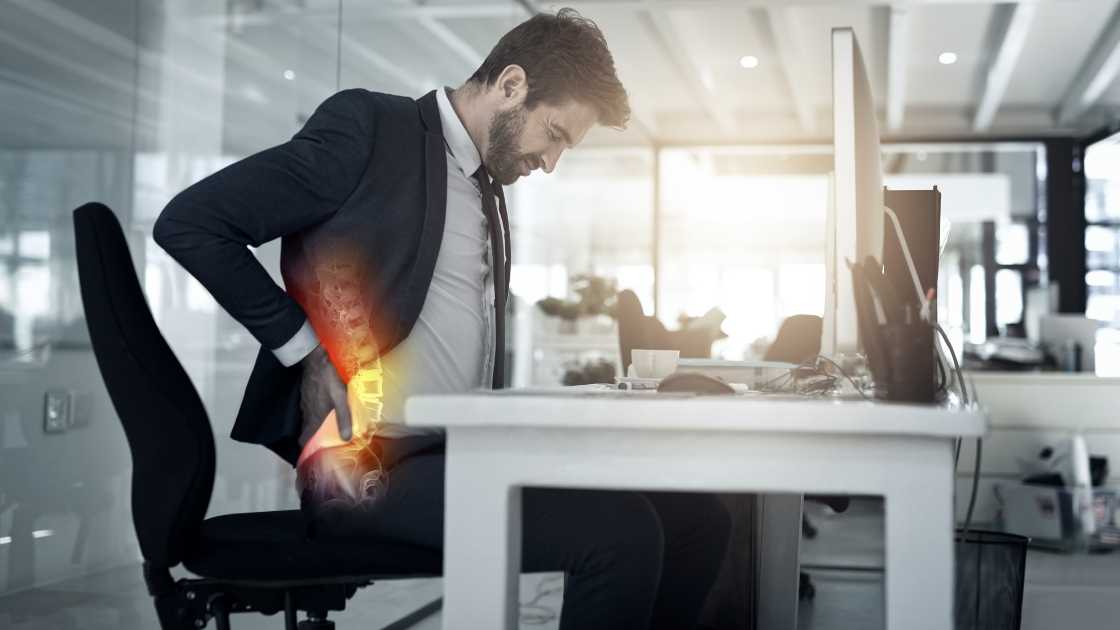
12 Shocking Facts About Your Posture (And How To Fix Them)

Good posture is crucial to a healthy life. But did you know that your posture affects more than just how you look? It also plays an important role in how well your body functions. And while slouching over at your desk may seem harmless, it can actually lead to serious health problems like impaired cognitive function, decreased energy levels and even chronic pain. So sit up straight, and make sure these five shocking facts about good posture don't come as too much of a surprise. Poor posture can cause a number of issues, including arthritis exacerbation, breathing efficacy problems, circulation problems, fatigue, headache, jaw pain, mood change (depression), sexual dysfunction, shoulder and back pain. If static posture, core muscle, and shoulder blade stretches are performed properly every day, it will strengthen the flexibility of the back in a short time.


Exacerbation of arthritis


If you find yourself hunched over all day in front of your computer or driving your car while texting on your phone, you're putting a lot of strain on your spine. This can lead to inflammation in the joints and muscles that support the bones in your neck and lower back—which are already being used to support the weight of your head!


Breathing efficacy problems


When you're slumped over or rounded forward when sitting or standing up straight with good posture helps to open up the rib cage which allows for deeper breathing and more oxygen intake into the lungs. This will give you more energy throughout the day as well as help keep those brain cells firing at optimal levels! For years, doctors have been connecting poor posture with breathing problems and lung disease. But in recent decades, they've also discovered that poor posture can cause an irregular breathing pattern that makes you more susceptible to illness or injury. Poor posture puts stress on your muscles and joints and can affect the flow of oxygen to the brain. This can lead to memory problems, muscle cramps and more serious issues like depression or anxiety.


Circulation problems


These can also be caused by having poor posture for long periods of time each day at work or school whether it's sitting down typing emails/texts/emails on a smartphone all day long sitting in class listening intently and taking notes. 


Fatigue


Your body doesn't have room for all the blood flow if you're constantly tilting forward in order to see things clearly. This causes fatigue because there isn't enough oxygen reaching the brain and all the other organs.


Forward head posture


When your head is forward, it puts more pressure on your spine. This can cause back and shoulder pain as well as headaches and migraines. It also affects your breathing because it causes tension in the muscles around your neck and shoulders which makes them harder to move air through effectively. Forward head posture can even make it difficult to speak properly because it changes the shape of your jawbone which changes the way sound comes out when you're speaking!


Headaches and jaw pain


It all starts with your head. When you're hunched over and your shoulders are rounded in an attempt to hold up the weight of your head, you're putting unnecessary pressure on your neck. This can lead to tension headaches and jaw pain.


Sexual dysfunction


On top of that, poor posture affects your mood and ability to feel pleasure—because it makes you look like you have no energy or enthusiasm for life! Shoulder and back pain And finally, it can cause shoulder and back pain because your spine is not aligned properly when you're hunched over. Poor posture isn't just about how you look—it's about how healthy you feel! If you want to live better every day, be sure that you're standing up straight with good posture at all times!


Memory and cognitive function


Your slouchy posture can affect your memory and cognitive function. According to experts, poor circulation may be one of the reasons that slouching affects your memory and cognitive function. Another study found that other factors like back pain and neck pain could also cause issues with blood vessels in the brain, which can lead to reduced oxygen supply. This ultimately leads to slower thinking processes and impaired memory. Physical therapy is the only way to correct posture.

Another study found that people who have a flat or hunched back tend to experience greater levels of stress than those who have an upright posture, which leads them to have higher cortisol levels after stressful encounters. Cortisol is a hormone released when you're under stress; high levels of it can impair focus by increasing anxiety levels and making it difficult for you to concentrate on anything else but what's stressing you out at that moment (like how bad your posture is).


Look and feel


Your posture has a profound effect on how you look and feel. It affects the way your body is perceived by others, as well as how you perceive yourself. Good posture can make you feel better about yourself and increase confidence, productivity, and even digestion. Bad posture will have the opposite effect: it can make you appear older than your actual age; it can lead to back pain or other health issues; it can cause headaches; it makes us less productive at work; and it makes us feel bad about ourselves, like we aren't good enough because we don't measure up in some way. Proper posture by a physical therapist not only fixes muscle tension, but also helps in gaining a dynamic posture. This approach not only will improve your posture but also keep your shoulder, hips and knee in good shape. With the right ergonomics, you will not have rounded shoulders or low back pain. Your abdominal muscles, and shoulder blades will not experience muscle fatigue. Frequent breaks and standing up are just as important to strengthen your core muscles and fix your posture problem.


Cardiovascular, respiratory and nervous systems


Good posture is important for the cardiovascular and nervous systems to carry out their normal functions. The cardiovascular system relies on good posture to provide the optimal conditions for blood flow and oxygenation. When you slouch, you not only restrict blood flow but also reduce your lung capacity. The respiratory system depends on a healthy spine for proper function. The body naturally takes shallow breaths when you slouch which can lead to poor air quality in the lungs due to carbon dioxide buildup and decreased oxygenation of tissues throughout the body which can cause headaches, fatigue, stress or anxiety. The nervous system relies on good posture to transmit signals through neurons (brain cells) without interference from surrounding muscles or joints that may be pulling in different directions during movement (called muscle tone). When there’s any disruption in nerve transmission such as tightness in muscles or joint misalignment then it can affect how well these messages are received by other parts of your body causing physical symptoms such as back pain or headaches. 


Sitting is the new smoking


Even sitting in front of a computer all day can damage your posture over time. A standing posture is the best exercise to fix your spinal alignment. Don't go after braces, your real posture corrector is your physio who will fix your forward head posture and muscle imbalances. Proper alignment through sports medicine will not only result in perfect posture but also usher in healthy living. Besides, you can say 'goodbye' to pain and spine issues of any kind, such as lower back pain. A better posture can even prevent heart attack.

The right stretch will help you gain the ideal posture and help your stomach muscles to support your spine.
If you sit at a desk all day, you are probably familiar with the aches and pains that come along with it. And if your job requires you to stare at a computer screen for hours on end, chances are good that your posture has suffered.

According to the
American Chiropractic Association (ACA), poor posture can lead to chronic pain and muscle strain throughout the body-particularly in the neck, shoulders and back. The ACA also reports that more than 80 percent of Americans suffer from some type of back pain during their lifetime (and one-third will have lower back problems). One study even points out that sitting at a 135-degree reclined angle with feet flat on the ground is better for the spine than a 90-degree tilt. 


What can you do to improve posture and breathing?
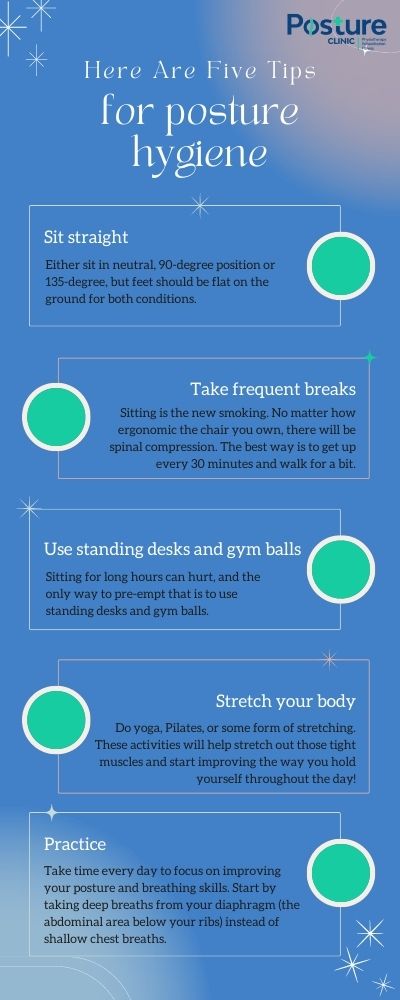


tips on good posture

You may be surprised to find that your posture can improve with simple changes. Gain a good posture by following these seven tips...

  1. Take a break

This is a great way to improve posture, because it allows you to stop and think about how you're standing or sitting. You might not realise that you're slouching until you take a moment to sit up straight and take stock of yourself.

  1. Change phone

If your phone is causing problems with your posture, try switching to an old-fashioned landline for the day or even permanently! You'll see an immediate improvement in your body's alignment when you're not hunched over trying to read tiny text on a screen.

  1. Dump the phone and have a technology holiday

If that's not possible, give yourself time off from technology (including laptops) every day or two so that you can focus on improving your posture and breathing techniques. You might be surprised at how quickly this improves things!

  1. Do yoga, Pilates, or some form of stretching

These activities will help stretch out those tight muscles and start improving the way you hold yourself throughout the day! Again, it takes practice to get it right—so don't expect miracles overnight!

  1. Standing desks

They are the best way to improve your posture at work. You can also try using a standing desk at home, but if you don't have one, try to find a place in the house where you can stand up when doing chores or cooking.

  1. Find the neutral position of your spine and limbs

This means keeping them in alignment with each other. For example, when standing up straight, make sure your shoulders are back and down, and not rounded forward or pulled back too far like a turtle shell.

  1. Practice

Take time every day to focus on improving your posture and breathing skills. Start by taking deep breaths from your diaphragm (the abdominal area below your ribs) instead of shallow chest breaths that take more energy than they give back in terms of oxygen exchange through the bloodstream for fuel for muscles during exercise or other activities such as walking around school campus between classes instead of sitting on bus all day long!


Conclusion


You probably think of your posture as something you’ve always had, or something that’s out of your hands. But good posture is a habit that can be made-and broken! You might not be able to control whether or not you slouch, but you can work on improving your posture in small ways every day. It may feel uncomfortable at first, but these tips will help make it easier for you to correct even the most ingrained bad habits. If you need to fix your posture under expert guidance, call the Posture Clinic for timely intervention. Our posture experts will correct your gait and help you lead a pain-free life. Call +91-77601-37578.


How To Increase Your Height and Correct Posture At Home

Correct posture is the foundation for good health. It is never too late to improve your posture and improve how tall you appear. But here are some facts you should know before you get started. 

  • Small frame people will not grow taller naturally, even with surgery. 
  • A small-boned, light-framed person who slouches and bends forward will never become tall naturally (not even with surgery).
  • A small-boned, light-framed person will never become tall naturally.
  • However, a large boned, heavy set person with short stature may appear taller after weight reduction. For example: A girl who has lost 9 kilos and is now 45 kilos at 5 feet 4 inches will increase her height by approximately 1 inch if her spine was actually longer than normal, but not enough to make up for the extra weight. For example: A man who has lost 18 kilos and is now 90 kilos at 5 feet 10 inches will also increase his height by approximately 1 inch if his spine was actually longer than normal (which it probably wasn't).

It is important that you understand that losing weight alone will not increase your height. The only way you can increase your height is to have an orthopaedic surgeon lengthen your spinal column surgically. However, there are risks associated with this procedure which include paralysis from complications related directly or indirectly to this type of surgery, such as infection or blood clots associated with lying flat on one's back for extended periods of time during recovery.

You cannot change your genetic characteristics but can always have correct posture and better height.

You cannot change your genetic characteristics but you can always improve your posture and, to an extent, the height you appear. Enhancing the way you stand, sit or walk improves spinal health. A good posture helps you appear taller, while bad posture makes it seem like you've lost inches. At Posture Clinic, we can help you with all of this and lead a tall and pain-free life. There is no shortcut to increasing height naturally outside of surgery, so the smarter focus is to strengthen and realign the spine for health and energy.

In the human body, the spine is what supports the entire body and gives it structural integrity.

The spine is a long, flexible structure made up of vertebrae, which form the central support for your body and protect the spinal cord. There are 24 movable vertebrae, and their alignment shapes your posture and mobility throughout life. As we age or adopt poor habits, postural collapse can silently steal away height and energy. Good posture preserves both your health and appearance.

When the spine’s structural integrity is compromised through bad posture or has degenerated due to ageing or injury, it can lead to a reduction in height and cause mobility problems.

Correct posture is not just the foundation of good health but also shapes your self-confidence. Upright posture supports organ health, keeps muscles working efficiently, and maintains overall body balance. Poor postural habits like slouching or excessive sitting without breaks lead to muscle fatigue and, over time, more injuries and chronic discomfort. Simple strategies and mindful movement halt this decline.

For better results, practice correct posture with these exercises every day for around fifteen minutes.
  • Child’s Pose with Breathwork: Kneel on the floor, lower your torso forward with arms outstretched, and rest your forehead on the mat (see image). Inhale through your nose, exhale through the mouth, and gently pull your stomach in with every breath out. Remain for 1-2 minutes to deeply relax your spine, hips, and mind.
    Child's Pose
  • Spinal Stretch Routine (4 Moves): Cycle through four essential movements—extension (gentle backbend), flexion (forward fold/rounding), lateral flexion (side bend), and rotation (twisting) as shown below. Move slowly, coordinating breath with each action. This sequence restores movement and balance to the entire spine.
    Spinal Movement Routine
  • Dead Hang: Grip an overhead bar with both hands and hang with arms extended. As you hang, inhale through your nose and exhale through your mouth evenly. Dead hangs gently decompress the spine, stretch the shoulders, and improve grip strength. Start with 10–20 seconds, building over time as your strength improves.
    Dead Hang
Just do it

It is never too late to work on your posture and enhance how tall and energetic you feel. Look at your reflection—do you slouch or round your shoulders? Start now with these simple moves at home. Here are two practical hacks for healthy posture:

  1. Use a water bottle as a cue to stand tall—carry it and every time you pick it up, reset your posture to upright.
  2. Set aside 15–20 minutes daily for posture moves and conscious sitting or walking tall—small consistent habits yield results over time.
  3. During these exercises, imagine a string pulling up from the top of your head—this visualization reminds you to align your spine and stand taller.

You can lead a pain-free life. The choice is yours. Good posture or bad posture? 

---
Conclusion

Static posture, muscle tension, neck pain, and aching shoulders can be solved with posture experts. Posture Clinic will ensure ease and comfort, by greatly improving your core strength, hips, and thighs. With a dynamic posture, you'll notice that people respect you more.

When your posture is corrected by a posture expert, it results in back support and muscle tension relief that will help you sit and stand in good positions, improve your core strength and relieve muscle fatigue, stomach cramps and lower back pain.

Have you been feeling tired with some minor aches and pains? Maybe you're having trouble with your joints or posture? With the right posture correction, you can improve your core muscle strength and lengthen your muscles. In a matter of weeks, you'll notice the difference! 

You'll stand tall, have better posture and less back pain with the right posture expert at your beck and call. You'll have dynamic posture, muscle fatigue, and shoulder blade control, improving posture, and eliminating low back pain, lumbar spine issues. If you strengthen your postural muscles, you will be able to fix any ailments related to stomach muscles, abdominal muscles, muscle strain, shoulder blades, and poor posture.


Stretching, even for a moment, can make all the difference in reducing muscle tension and posture problems. Only the right physio can keep you motivated and pain-free.

What is Posture Correction?

Postural correction is a popular way of treating any kind of back, neck, shoulder or knee pain. If you're suffering from chronic pain in these areas, you may wish to consider this form of treatment. When you go to your local posture correction centre, they'll carry out an X-Ray examination. They may even do a motion analysis system (MAS) scan to check your posture when standing up straight on two feet. The next step would be to visit the Posture Clinic where we will provide physical therapy sessions. These may include spinal manipulation or other types of movement therapies, such as massage therapy. The underlying idea is to relieve some of the pressure and discomfort caused by poor alignment in bones while sitting or standing upright.

With the correct posture, you will not experience the pain level encountered due to spinal misalignment. Only posture correction exercises can help in spinal alignment, and better posture. Spinal adjustments are crucial to a healthy lumbar spine, thoracic spine, and shoulder blade. Improper posture can weaken postural muscles and prevent proper alignment of the body. Posture improvement can only happen through a posture correction specialist, not a brace or a posture corrector belt. They are merely marketing gimmicks. What you need is a posture expert who can rectify the muscle imbalance by proper assessment, correction, and treatment.

What is postural correction?

Postural correction is a type of treatment for people who suffer from any kind of pain caused by a misaligned spinal cord. It involves a series of exercises and treatments that are designed to help you get better. Posture correction can help you live a pain-free life.

What is posture? 

Posture refers to the way you hold your body when you are standing, sitting or lying down. It can be dynamic (when you are moving) or static (when you are standing still). Posture has a direct bearing on factors, such as genetics, environment and lifestyle. Posture correction is one of the most common treatments offered at Posture Clinic. Our therapeutic program corrects any posture problems caused by injury or disease. It can also help people with chronic pain who have not been able to find relief through other forms of treatment.

How is pain and posture correction related?

As with many other chronic conditions, pain and posture are both caused by the same factors. Our posture experts will recommend a course of posture correction to address the pain. Posture correction is an easy-to-understand process that uses massage therapy to correct poor muscle tension, so that your body is able to function properly again with proper posture. The trained posture expert at Posture Clinic will work on specific areas where there is tension or excess pressure on muscle tissue that has caused changes in its shape or length, triggering the pain.

How to lead a pain-free life with good posture

Posture correction is not a cure for back pain, but it can relieve pain and improve your quality of life. People with good posture have less discomfort and fatigue than those who slouch or suffer from poor posture. One of the most important aspects of having good posture is being able to stand up straight without discomfort. This involves using your core muscles to help keep you upright while avoiding pressure on the lower back by lifting your chest as high as possible while lowering the shoulders away from your ears.

You can also keep good posture at work by sitting up straight (avoiding slouching), leaning back slightly in a chair with feet flat on floor, keeping arms and legs uncrossed while typing or using a computer mouse. For pain-free office life, a proper computer posture is the best way out. Similarly, you require a proper posture for sleeping to ensure that you don't wake up with back or neck pain. 


Postural correction is a term used to describe several types of treatment that are given to patients who have long-term back or neck pain.


It's important to note that not all chiropractors perform this type of treatment, so it's important to do your research before choosing a healthcare provider. Here is where Posture Clinic scores because we have Dr Pooja Jhade who is certified by the American Posture Institute.  The goal of posture experts is to restore the normal alignment and range of motion in the spine, allowing patients greater mobility and flexibility in their daily lives. Good and bad posture are the difference between painless living and painful existence.

Practising good posture, such as good running posture, proper head posture, correct squat posture and correct sitting, can help to reduce back pain and other problems associated with poor posture.
The correct sit up posture is important for longevity and health. The correct walking posture can prevent injury. Having good posture for height can also be helpful in preventing back pain and other problems associated with poor posture.

Similarly, Kyphotic lordotic posture correction is the process of correcting bad postures by making small changes in your daily habits and activities. Posture Clinic improves your posture using kyphotic lordotic posture correction techniques, such as good seated posture (correct knee posture) or proper walking posture (correct knee).

Several different types of motion analysis systems and treatments can be used, depending on the diagnosis.

The type of system used depends on the diagnosis and the patient's condition. The system can be used to help diagnose the patient's problem and determine the best treatment for their conditions. It can also be used to help monitor their progress throughout treatment.

Treatments may include spinal manipulation, short-term neuromuscular electrical stimulation, guided exercise, massage therapy and heating and cooling therapy.

There are many treatments that may be recommended, depending on the type of posture problem you are experiencing. Spinal manipulation is a treatment that uses a hands-on approach to realign the spine. It's often done by a chiropractor or physical therapist who applies pressure to specific areas of your back to relieve pain or increase mobility in your joints and muscles. Short-term neuromuscular electrical stimulation uses a small device that delivers electrical pulses to the muscles in the back, neck or shoulder.

This helps them relax so they can be more flexible during physical therapy exercises aimed at correcting poor posture habits, such as slouching over desks or carrying around heavy bags all day long! Guided exercise is similar but involves working with an expert who teaches you how to do specific exercises while they supervise your progress. They help correct any misalignments as soon as possible before any major problems arise!

Massage therapists specialise in deep tissue massage techniques that target trouble areas like tense muscles caused by sitting down too long without taking breaks throughout workdays (which could lead someone into developing bad habits such as hunching over computers all day long). They also use heat packs/ice packs depending on what type of soreness needs attention most urgently after prolonged periods spent hunched over typing.

Patients who choose posture correction should expect to participate in at least two sessions of treatment a week over several weeks or months, depending on the severity of the pain or injury.
It is important to note that patients who choose posture correction should expect to participate in treatment over several weeks or months.

What are the common posture mistakes and how to remedy them through exercises

When you are sitting down, your head should be in line with your spine. If it's not, it means you have a forward head posture that can lead to neck and back pain as well as headaches. To correct this problem, you need to do some exercises that will help strengthen the muscles in your upper body. These include chin tucks, wall squats and plank holds, among others.


To qualify for treatment at a local posture correction centre, you will need an X-ray taken of your body to help show how badly your bones are misaligned while standing or sitting.


X-rays are used to help determine the severity of the problem. They can show the alignment of bones in the spine, neck and shoulder. A scan may be ordered if you have pain from arthritis or injury; if there is a history of back pain that doesn't improve with treatment; if it's hard for you to sleep because of aches and pains in your joints; or if other conditions suggest that spinal problems contribute to your discomfort (like migraines).


Myostatic tape (adjustable compression) and orthoses (for example, rigid supports) are sometimes prescribed with postural correction so that you might be helped for long-term pain relief.


Orthoses are the most common form of treatment for musculoskeletal pain. Orthoses are usually prescribed as a way of helping you adapt to your postural problems. This can be done by either taking pressure off the affected area or putting some kind of support over it.
There are two main types of orthoses: myostatic taping and rigid supports (such as back braces). Myostatic taping involves using elastic tape to apply gentle pressure over the problematic area, which may help reduce pain and inflammation.

Rigid supports have different uses depending on which part of your body they target, but they all provide support without restricting movement too much. They're often made from hard plastic materials, such as polypropylene or polycarbonate. However, some manufacturers also make them from softer materials like silicone rubber or leather-like materials that look more comfortable than other types on skin contact areas where there might be sensitive nerve endings (for example around joints in fingers).


The person who prescribes an orthotic device will decide what type is best suited for your needs based upon their own judgement based upon how long you've been experiencing symptoms; any medical history relating to previous injuries; how long those symptoms lasted after injuring yourself; where exactly those injuries occurred; any tests results conducted during diagnosis - including X-rays etcetera - so they can see what damage has occurred within these areas.

Postural correction is a popular way of treating back, neck or shoulder pain

Postural correction involves several different types of motion analysis systems and treatments, including: The McKenzie Method - This uses an adjustment table. The doctor will adjust your spine while you lie on the table. This helps loosen muscles that may be causing your pain and stiffness in your joints or bones (vertebrae). Adjustments with an instrument called a "polarity stick" - Your doctor will use this tool to help reduce pressure from nerves that send signals from one part of your body (such as your neck) to another part such as the brainstem or spinal cord where they can cause discomfort or even severe pain.

Conclusion

You could write down these keywords on your corkboard, and look at it every time you work: "Good body posture, good walking posture, proper walking posture, correct running posture, proper running posture". Postural correction might sound like an intimidating process, but it is actually quite an effective treatment for many types of body pains.

If you are frustrated by chronic pain and want to regain your quality of life, try visiting a posture correction centre, such as Posture Clinic in HSR Layout, Bangalore. The facility will assess whether this type of treatment is right for you and put together a personalised plan that can help alleviate your discomfort over time.


Seiza Corrects Your Posture and Adds Years to Your Life

Seiza derives from two Japanese words: "sei", meaning correct, and "za", meaning "to sit".Seiza (正座) is a traditional Japanese sitting style that has its origins in the samurai era. It's also known as seiza-dachi, which literally translates to "correct sitting." Seiza is a way to correct posture and maintain good health, but it can also help clear your mind for meditation and focus during other activities. Seiza allows us to sit longer without experiencing back pain or feeling tired afterward. The longer we sit in seiza, the more benefits we gain from it - both physically and mentally!
Seiza can take years to master.
It's a lifelong practice, and one that can take years to master. It's no small feat to be able to sit in the perfect seiza position for hours at a time. Practitioners of the art must remain focused on their breathing and continue practising even when they feel pain or discomfort from sitting in this position for long periods of time. This reliable dedication has been proven as an effective way for people to improve their overall health and well-being by improving posture and reducing back pain.
Seiza is a sitting style that has its origins in Japan.
The name seiza derives from the Japanese words 'sei' and 'za'. Sei means correct, while za literally translates as sitting. So together they mean “correct sitting”. Seiza is a traditional Asian Buddhist style of sitting that's been around since the 6th century. It was originally practiced by Samurai warriors who used to sit on their knees or ankles during battle to be ready for action at any time (if you've ever seen anime, this is probably familiar).
The practice was first adopted by Samurai warriors to find stillness before battle.
While its exact history is shrouded in mystery, many believe that the practice was first adopted by Samurai warriors between the 12th-16th centuries as a way to find stillness before battle. In their training, they learned to use their mind and body together for maximum efficiency. They were taught to be mindful of every action, from how they sat on a horse or prepared their armour for battle. When it was time for actual combat, there would be no hesitation or wasted movement. This method teaches you to be present in every moment of your lives by being aware of both your bodies and minds at all times.  Seiza is used in meditation and formal ceremonies, but it can be used anywhere you want to sit with good posture. The basic method of sitting on the floor with your legs folded underneath you is called suwari-waza. There are many variations of this basic posture, some more extreme than others!Sitting down in seiza style on a tatami mat is typical during a tea ceremony. The seiza bench is best for the kneeling position as it eases the strain on the back, knees and foot. Ancient Japanese standards for a sitting posture dictate this etiquette. For Japanese people, this is a formal sitting position in formal gatherings. The seiza posture enables flexibility and gives enhanced functionality to the right leg and knee joints.
Another popular belief is that seiza originated as a method for people to sit down without disturbing their formal attire.
Another popular belief is that seiza originated as a method for people to sit down without disturbing their formal attire or disturbing tea ceremony accessories, such as folded napkins or plates. It soon became widespread within samurai culture as an important element of training. Samurai would practice sitting in seiza to ensure they could keep their balance on horseback. The military application of seiza is still seen today in Japan's armed forces, where soldiers will sit on the floor during morning formation, cross-legged and facing each other while they wait to receive instructions from their commanding officers.
Proper seiza seating maintains correct posture during meditation or mindfulness practices.
Seiza is a way of sitting that corrects posture, adding years to life. It is used in meditation, mindfulness practices and yoga. Seiza involves placing the legs together and lowering yourself onto both knees so that your buttocks touch the floor. The tops of your feet should be touching and your calves should be parallel to one another. Your hands should rest on your thighs with palms facing upwards. Your head should be aligned with the spine so you can breathe deeply without hunching over or slouching down during this seated position as it can cause back problems later in life if done incorrectly for long periods of time, like at work!
How To Do Seiza
The key thing about sitting seiza style is to keep an erect back. It's even better if you can slightly tilt your upper body backwards while keeping your head upright with no strain on the neck - this means you should be leaning slightly back rather than forwards when sitting cross-legged in seiza. If this isn't possible for you yet, then there are other options such as placing a cushion under each hip or simply changing positions so that one leg is crossed over the other (but still maintaining an upright posture).
Frequently Asked Questions
How do you sit in seiza without pain?
The secret to sitting in seiza without pain is to do it slowly, and to make sure you're doing the pose correctly. When you sit in seiza, your thighs should be parallel to the floor. Make sure your knees are at a 90-degree angle so that your legs are square. If you have a hard time getting your legs into this position, try sitting on a pillow or cushion until you get used to the feeling of it. Once you're able to sit comfortably in that position for about 20 minutes, then start working on improving your posture by keeping your back straight and leaning forward slightly from the hips (instead of slumping). If you still experience pain in this position after practicing for several weeks, then it might be time to see a doctor who can help diagnose what's causing the pain and give recommendations for treatment options!
Is sitting on the ground better than a chair?
The answer to this question is a resounding yes. Sitting on the ground is better than sitting in a chair for many reasons, including:It's healthier for your back and spine. The way you sit can affect your posture, which can lead to back pain and other health problems.It's more comfortable. Sitting on the ground will help you relax and unwind, making it easier for you to fall into a state of deep relaxation.
How long can you sit in seiza?
It depends. If you're doing seiza for a short period of time, you can sit for about 20 minutes without any issues. If you're going to be sitting longer than that, it's important to take breaks, and make sure you get up and move around every once in a while. It's always a good idea to practice seiza for short periods of time when you're first learning the position. It's easy to get tired, and it takes time to build up your strength and endurance in your legs.
Is seiza good for the spine?
Seiza is a great way to strengthen the spine, especially if you do it regularly. The more you practice seiza, the stronger your core muscles will become. The idea behind seiza is that you're able to keep your spine in a straight line by putting all of your weight on your heels and sitting cross-legged. If you have good flexibility and balance, this can be a great way to keep your spine in alignment and prevent back pain. But if you're not used to seiza or don't have the flexibility required to sit on your heels, then seiza can be harmful. You can end up putting too much pressure on your lower back when you sit like this, which could lead to pain or injury. If you want to try out seiza, start slow. Work up to it over time by sitting cross-legged for longer periods of time with less pressure on your heels. When you feel ready for more advanced positions like seiza, make sure that you're using proper posture when practising them so that they don't cause damage!
How can deskworkers benefit from good posture?
Most deskworkers are experiencing issues due to poor posture. Only physical therapy and seiza style sitting can rectify bad posture. The right physical therapist can not only improve your posture but also relieve muscle tension, fix rounded shoulders, neck pain, lower back pain, muscle fatigue, and much more. Posture problem is caused when a person does not take frequent breaks, causing muscle strain, forward head posture, and muscle imbalances. For healthy living, abdominal muscles, shoulder blade, dynamic posture, ergonomics proper alignment of the spine, and sports medicine are the key to better posture. An ideal posture or perfect posture can only be achieved with the right exercise that strengthens your core muscle and stomach muscles. Your posture corrector is not a brace, but a posture expert who can help you stretch your spine and achieve neutral position in your standing posture.

Why High Heeled Shoes Are So Bad For You

We know, we know—you've got a lot to do today. You're probably thinking that you'd rather just wear your favourite pair of high heels, because they're comfortable and make you feel good about yourself.


But guess what? You could be doing yourself a huge disservice by wearing those shoes.


High heels are bad for your feet and bad for your body. They make you more prone to injury (anterior pelvic tilt) and cause postural problems, such as lower back pain (lumbar lordosis). We've put together this list to help you understand why a high heeled shoe is the worst thing ever:


They can be dangerous

High heels can also cause you to lose your balance and fall. This happens because the higher heel means your centre of gravity is altered, making it harder to keep your footing. If you wear high heels often, this can lead to injury over time as well as more frequent falls. This is just one of the many studies to prove that a high heel will lead to poor posture as it affects your gait. Ankle sprains could become more common, and you might need a foot massage quite often. The right body posture enables injury prevention. A lower heel is better for functional mobility than a high heel. A physical therapist will advice you to wear a flat shoe instead for proper posture. 


Many people have twisted an ankle while wearing high heels! The curvature of the shoe makes it more likely for your foot to roll inwards, which could lead to a severe ankle sprain or fracture if not attended quickly enough after falling on hard ground like concrete or stone flooring (for example). By contrast, flat-soled shoes have less of a tendency for rolling inward when standing still or walking slowly—so they may actually be safer overall even though they don't look as glamorous!


They can cause instability

The first thing to know is that high heels can cause your ankles to roll inwards. That's because they put you on your toes, which is a position quite different from the way humans are made to stand. You're supposed to have your weight distributed evenly between all four corners of your feet, but if you're wearing heels, some of that weight has been transferred up into our toes and away from the heel. The result is that one small part of the foot bears more pressure than it should—and this puts extra strain on muscles and ligaments in your lower leg as well as on tendons farther up in your ankle joint (or even higher, if you have an old injury around there). This can lead to discomfort and pain, especially when walking for long distances or standing still for long periods of time—which happens pretty much every day when you work!


And then there's what happens inside of your lower body: High heels tend to cause knee collapse inwards; hips tilting forwards; shoulders rolling forwards; backs arching backwards (or at least appearing so). All these things make it harder for ladies to move around efficiently—which makes sense if you think about it: If someone told you that you had 10 seconds before being crushed by falling rocks, you'd probably start running too fast!


They can affect your perception

One study found that women wearing high heels were more likely to notice a man's face than a woman's. They also noticed the male face faster than the female one, even if the image was in black and white.


Another study showed that women wearing high heels were more likely to notice a man's face than they were images of food or other items.


They may cause back pain

High heels can put a lot of pressure on the back muscles and ligaments, causing tightness and pain.


As you walk in high heels, the Achilles tendon stretches to help absorb shock as your toes hit the ground to take each step. The calf muscle is then activated more than usual to support that movement. All this extra activity puts stress on your lower back—the lumbar spine—which has to work harder than usual to keep your body upright and stop you from falling over. This can lead to pain along the length of your spine or in specific areas such as low back muscles (lumbar).


They can hurt your feet

  • Bunions: the bunion is a deformity of the joint at the base of the big toe, resulting in an enlarged bump and often pain. The big toe eventually points towards the other toes, which causes painful corns to form on its side.
  • Corns: caused by friction between shoe and foot, corns can cause discomfort as well as blisters when walking or standing too long.
  • Calluses: calluses are thickened areas of skin that develop when we repeat certain motions over time... they're not harmful but they can be uncomfortable and make it harder for you to walk properly if there's too much pressure on them from your shoes (and we've all had this happen before).
  • Blisters: these are small cuts that develop between layers of skin due to friction with another object such as clothing or shoes; they're usually painful but will heal after awhile if given enough time (but don't try ripping open a blister yourself because you'll just keep getting infected!).


Can shorten tendons in your legs and feet

You probably know that tendons are tough fibres that connect muscles to bones, but did you know that they can also stretch? Tendons are elastic and can be stretched over time. This means wearing high heels for a long period of time can cause your tendons to get shorter!


This is because high heels force you to stand on your toes, so you can walk properly in them. Your toes take the pressure of your body weight instead of distributing it evenly across all parts of your foot (as would happen if you were wearing flat shoes), causing stress on the tendon connecting your calf muscle with the bone in your ankle. When this happens over and over again, it causes damage over time – like how repeatedly stressing one part of an elastic band will eventually break it.

Conclusion

  • Wear shoes that are comfortable and safe. It’s important to wear shoes that are appropriate for the activity, fit properly and have good cushioning.
  • Wear shoes that fit properly. The right shoe is one with a wide toe box for your toes to spread out, without pinching or squeezing your toes together; a heel counter (the rigid fabric on top of the heel) should feel snug around your ankle bone, but not tight or constricting; and heels should be low enough so you can walk comfortably in them without rolling an ankle.
  • Wear shoes with good cushioning and ventilation. Cushioning helps absorb the shock of each step while walking or running so it’s easier on your joints; ventilation prevents sweat buildup by allowing air to circulate through the shoe's material—this helps keep feet dryer, warmer and more comfortable than if they were enclosed inside closed-toe footwear all day long!
  • If you are suffering from an injury due to high heels, Posture Clinic is where you should head to for complete rehabilitation, and also to prevent future injuries. 

Frequently Asked Questions

How often is it safe to wear heels?
Experts recommend wearing heels no more than once a week. If you're looking for a more comfortable, stylish shoe that works well with your lifestyle, they suggest trying out some flats!

How to avoid foot pain while wearing heels?

Make sure they're not too high. If your heel is more than 2 inches high, it can cause a lot of damage.

Do I have to wear socks with high heeled shoes?

Yes. Socks will keep your feet from sliding around in your shoes, which can cause blisters or other injuries.

How do I take care of my toes while wearing heels?

Make sure there is enough room for your toes in the front of a shoe. Otherwise, it might cause discomfort or even injury over time.

What happens to your feet when you wear heels every day?

Your feet start to change. You might notice that your toes feel cramped and stiff. Your arches might become flattened. You might get calluses on your heels from walking in them all the time. You might feel pain in your ankles or knees when you're wearing heels for a long period of time—that's because the muscles in your calves and thighs are having to work harder than usual to support your weight.

Should older people avoid heels altogether?

Yes, because the problem gets worse as you age. When you're younger, your tendons are more pliable and can adjust easily. But once you hit middle age or beyond, they become less flexible and may start to tear or sprain easily. That's why so many older people suffer from foot problems after years of wearing high heels!


Scroll to Top